

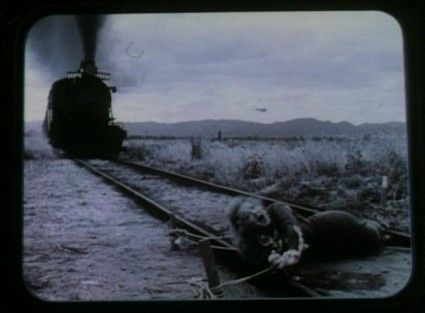
This is how I felt this week as double deadlines charged straight at me. The final draft of Dakota, the sequel to Montana, is due to The Permanent Press. But in the midst of working on that, I got the final proof of Montana – as in, my last-chance, drop-dead opportunity to make corrections. Anything I missed on this go-round lives to embarrass me in print.
 So I dropped the work on Dakota and spent two full days poring over Montana, finding 19 mistakes in the process. That sort of things gives you – at least it gives me – nightmares. Because what if I missed something? That’s the equivalent of getting run over by the locomotive.
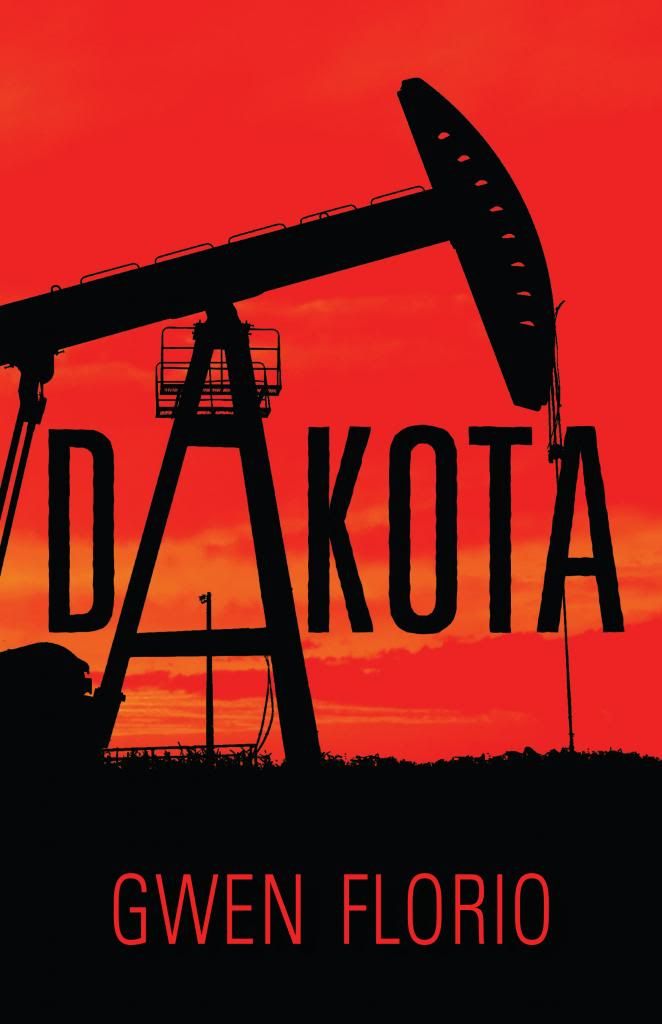
Now it’s back to Dakota, trying to shore up the spots that wobble and jettison the stuff that slows things down. The one good thing about the diversion back to Montana was that I found phrases that were repeated in Dakota. The big machete took care of that. Very satisfying! Even more satisfying? The kick-ass cover design by Lon Kirschner. Wowza!
Speaking of The Permanent Press, here’s a cool story in the Sag Harbor News about publishers Marty and Judith Shepard.
And, I never did follow up on Killer Nashville. Suffice it to say it was a blur – a productive, informative blur. The best part? Meeting the Shepards, and several of The Permanent Press authors, a frighteningly talented bunch. I am not worthy.
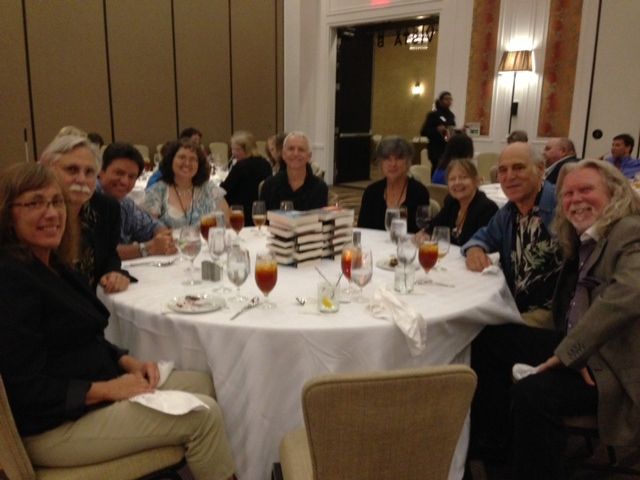
Above, from left, The Permanent Press crew – Me, Chris Knopf, David Freed, Beth (Jaden) Terrell, Mike Hicks, Connie Dial, Judith Shepard, Martin Shepard, Baron Birtcher
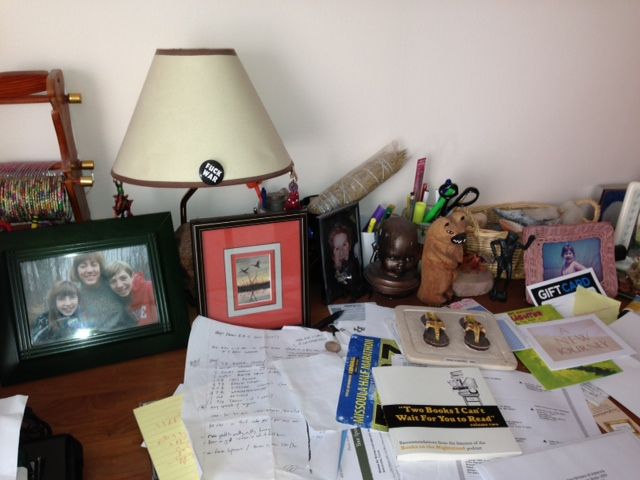 Anyone who’s ever seen my desk (at right, on a relatively clean day) knows I never throw anything out.
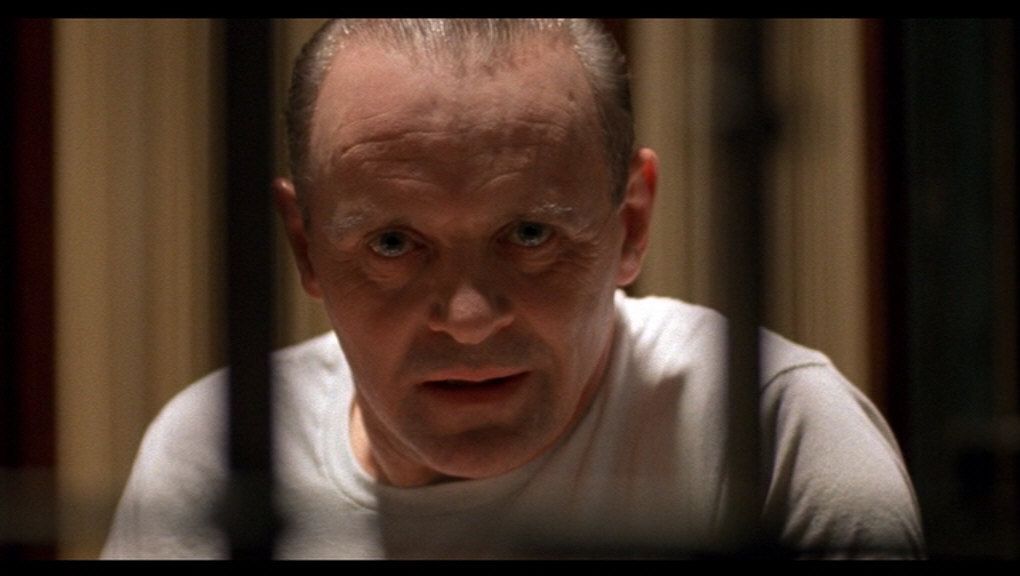 It just so happens that many years ago I wrote a perfectly dreadful novel set in Wyoming. It didn’t go anywhere, and thank God for that. But I liked parts of it, and now am happily going all Hannibal Lecter on those parts for this new novel. Which, as far as I’m concerned, is proof positive of the wisdom of never throwing anything away.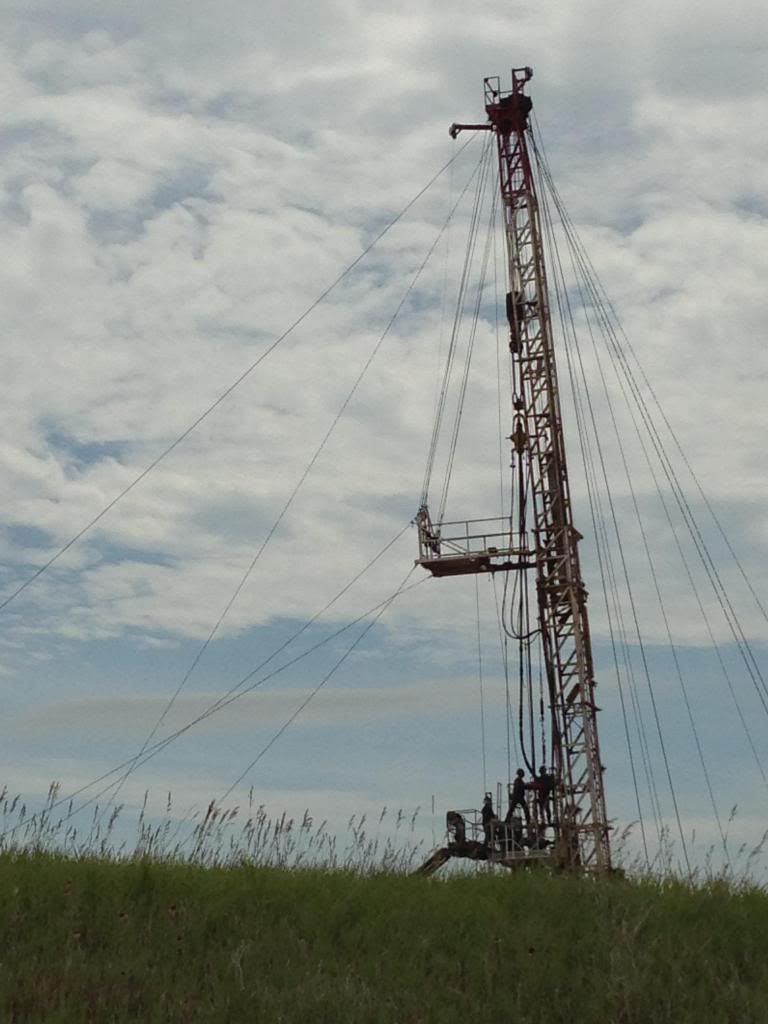
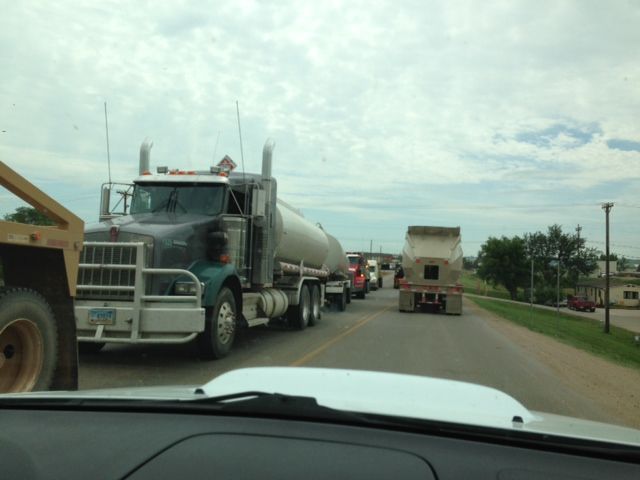 In North Dakota, we saw trucks, trucks and more trucks, trucks so big that they made a standard semi look downright dainty. We met a waitress who’s lived in her camper for two years and got a $100 tip one day, and dancers who make $1,000 a night. We saw a McDonald’s in a town an hour away that keeps closing down because it can’t get workers. And we saw
 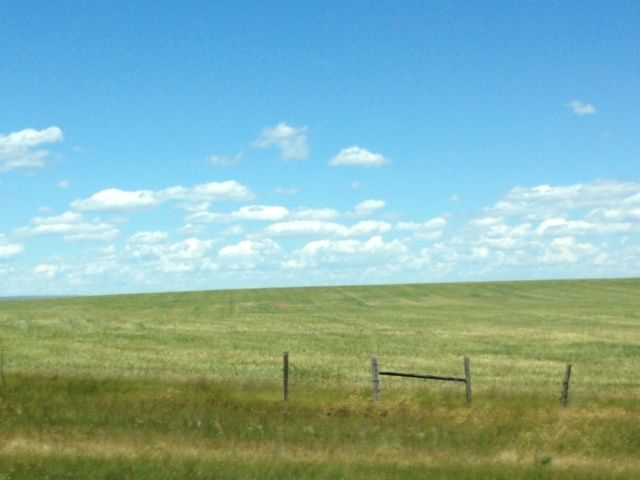 After which, the Hi-Line – sometimes disparaged as miles and miles of empty – felt wonderfully clean and soothing. I know the people who live there have a tough time. Jobs are hard to come by and amenities few and far between. But you can’t help but wonder — if the cost of full employment and skyrocketing development is the chaos evident in the patch, is it worth it?
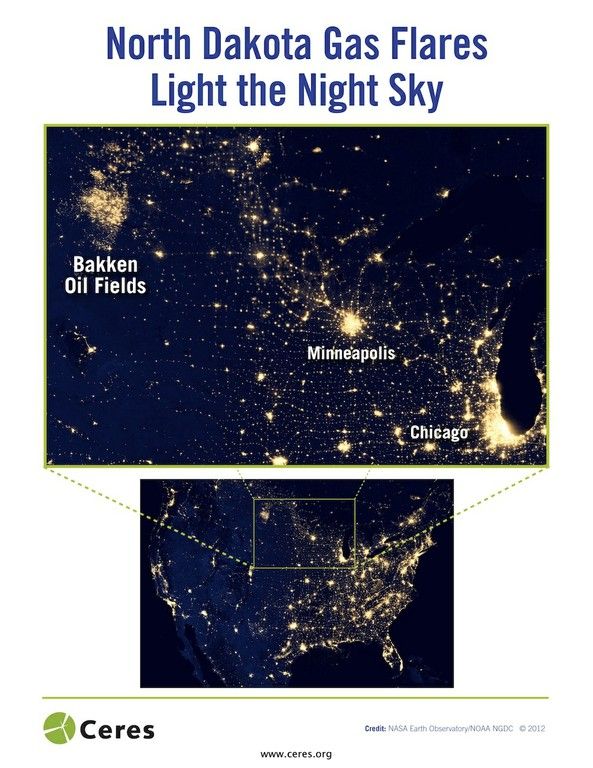 For sure, there are lots of tools – hello, YouTube – to give me a good idea of just how very much things have changed. And journalists working there have been generous with offers of help. When I still had a Real Job as a reporter, I used to stress to people how important it is to actually go to the scene of a story. Although it’s easy to get facts and figures and very fine quotes with phone interviews and online research, certain telling details – geraniums planted in an old coffee can beside a shanty on the lip of the massive garbage dump in Juarez, Mexico, say – can only be captured in person.
  But I’ve finally gotten around to
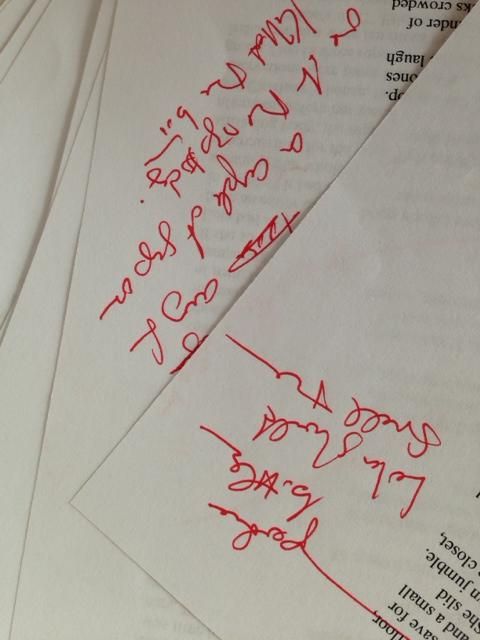 Halfway through that look, a lot is wrong! I make changes on a hard copy with a red pen, and it looks as though someone has committed murder on my manuscript. Although, to be more accurate, I’d have to say it looks as though someone is performing lifesaving surgery, because that’s what rewriting is.
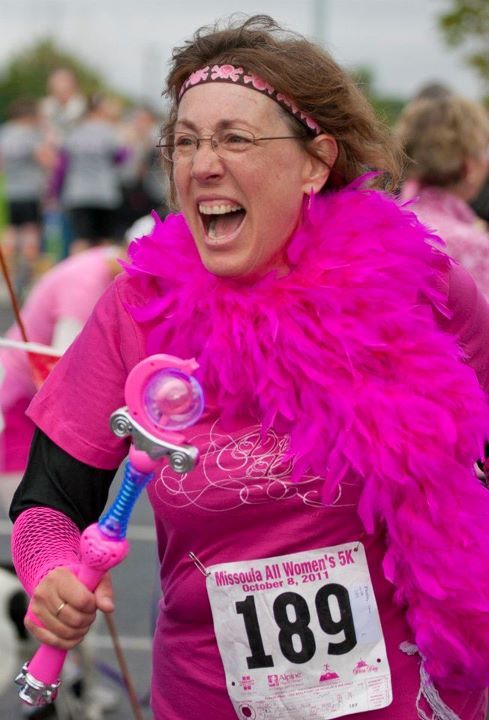 Today I began my third week of working for myself, which basically consists of a lot of bitching about my boss (crazy woman at right), who keeps telling me to sit down, shut up and write. Seriously, it’s been a much smoother transition than I expected.
  The downside? No paycheck. Let’s just say those lovely afternoon lattes at
 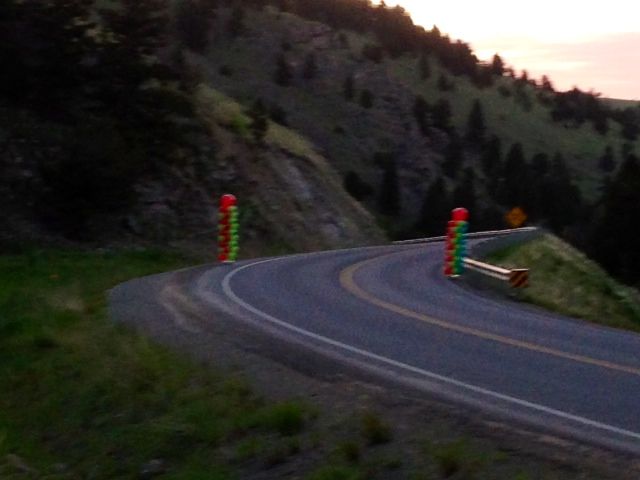 his last week though, the tables were turned, with the writing feeding the running. Or, in this case, the lack thereof. On a whim – which should have been my first clue that things would go badly – I signed up for the Governor’s Cup Marathon, in Helena, Montana. It’s a beautiful course, with a long downhill start from Marysville, a lonely spot on the road about 22 miles outside town. Maybe the downhill was more than my knees could handle. All I know is that I was in trouble by Mile 8. I hobbled along to Mile 13.1, for the psychological satisfaction of at least salvaging a half-marathon distance, and called it quits. My sweetie worried that I’d feel like a failure. “I feel great!” I responded. And I did.
 If I’d kept going, I’d have ended up with an injury. The whole thing reminded me of the way that leaving something in a book that doesn’t work, no matter how much you cherish that particular passage, hurts the end product. Cutting those parts is called “killing your darlings,” and some of my best writing is most bloodthirsty, wielding my delete key with the same relish with which Jack Nicholson swung his ax in “The Shining.” (That said, I generally save them in a file in case they might work better in some future piece.)
  It’s the brainchild of journalists