
Being a reporter is a great help when it comes to writing fiction. For starters, I have no qualms about walking up to strangers – strippers, in this case – and asking them about their lives. Dakota, the sequel to Montana, features exotic dancers among other features of life in the Bakken oil patch.
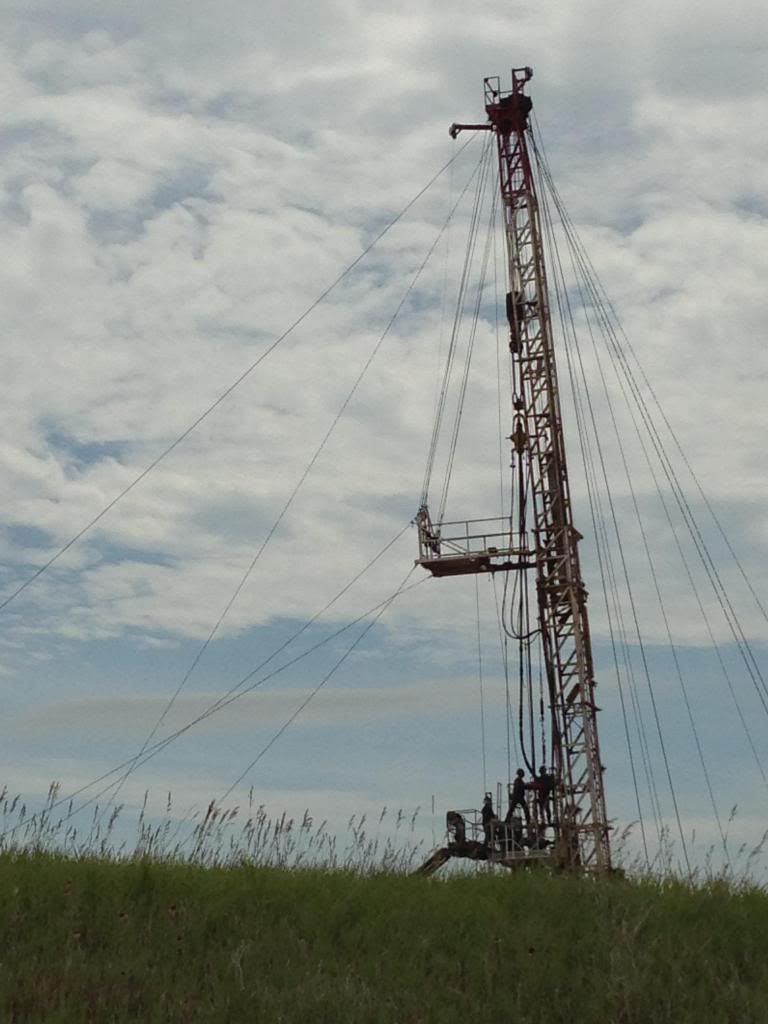
To get a taste of what that life is like, Scott and I – guided by the expert advice of journalist Amy Rose Sisk, working this summer in western North Dakota – hit the road last week on a 1,650-mile round trip that took us to the heart of the patch in Williston and Watford City, N.D., and then back home along Montana’s Hi-Line, its antithesis. It was long and grueling and punctuated by the worst bathrooms I’ve seen outside of Afghanistan and worth every minute we invested.
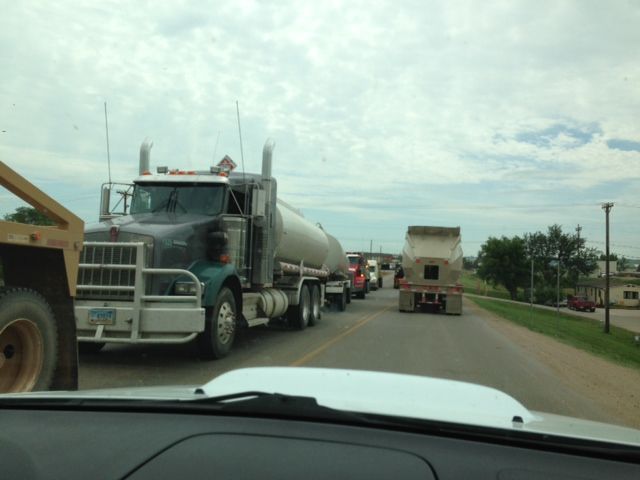 In North Dakota, we saw trucks, trucks and more trucks, trucks so big that they made a standard semi look downright dainty. We met a waitress who’s lived in her camper for two years and got a $100 tip one day, and dancers who make $1,000 a night. We saw a McDonald’s in a town an hour away that keeps closing down because it can’t get workers. And we saw man camps, rows of prefabs that seemed luxurious compared to the dozens of informal settlements of squashed-together campers in various stages of disrepair.
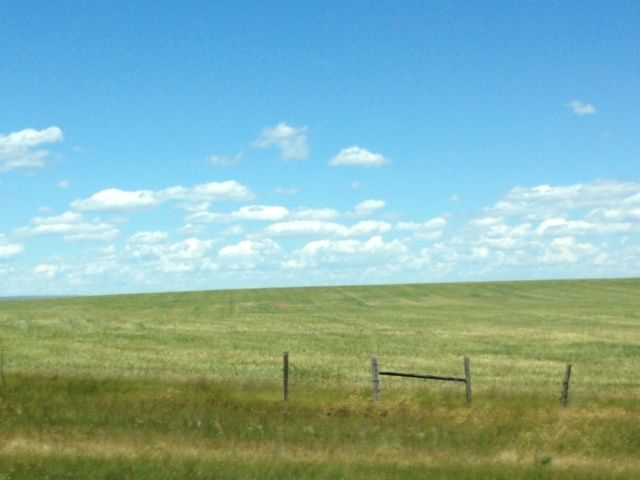 After which, the Hi-Line – sometimes disparaged as miles and miles of empty – felt wonderfully clean and soothing. I know the people who live there have a tough time. Jobs are hard to come by and amenities few and far between. But you can’t help but wonder — if the cost of full employment and skyrocketing development is the chaos evident in the patch, is it worth it?
Dakota doesn’t deal with that question, at least not directly. But, as with all the trips I made while working on newspaper stories, this one on behalf of fiction also raised issues that had nothing to do with the story at hand. The benefit? Those questions always led to more stories. Let’s hope it works that way with fiction, too.
Oh, and as for those dancers? Read Dakota!
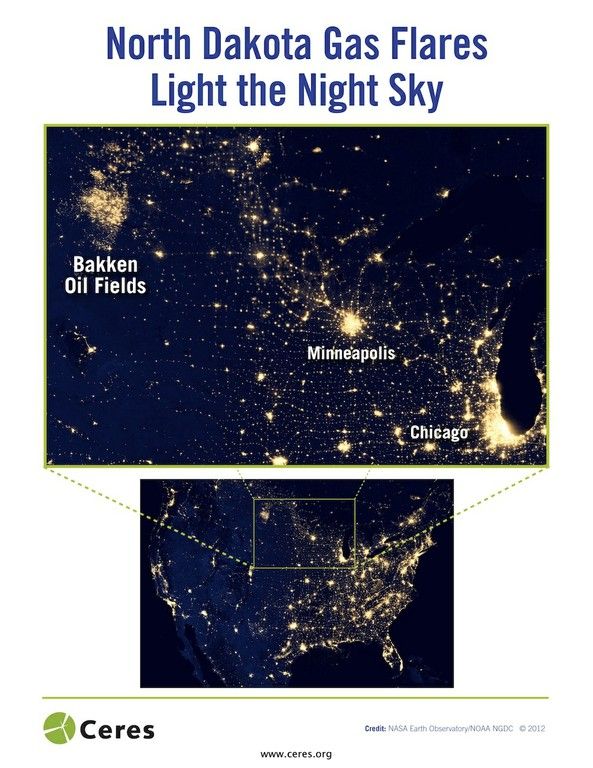 For sure, there are lots of tools – hello, YouTube – to give me a good idea of just how very much things have changed. And journalists working there have been generous with offers of help. When I still had a Real Job as a reporter, I used to stress to people how important it is to actually go to the scene of a story. Although it’s easy to get facts and figures and very fine quotes with phone interviews and online research, certain telling details – geraniums planted in an old coffee can beside a shanty on the lip of the massive garbage dump in Juarez, Mexico, say – can only be captured in person.
  But I’ve finally gotten around to
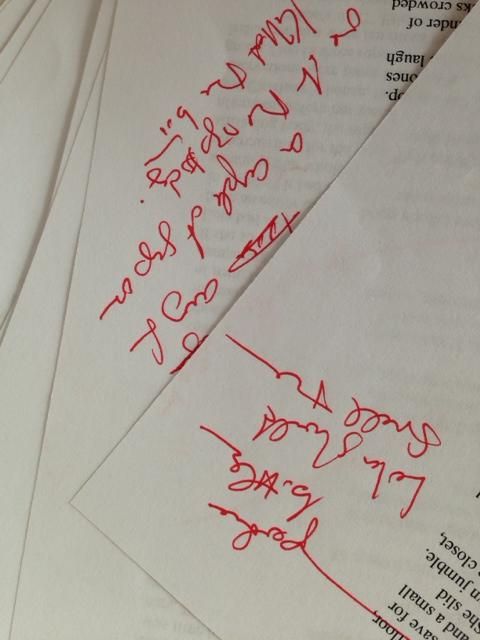 Halfway through that look, a lot is wrong! I make changes on a hard copy with a red pen, and it looks as though someone has committed murder on my manuscript. Although, to be more accurate, I’d have to say it looks as though someone is performing lifesaving surgery, because that’s what rewriting is.
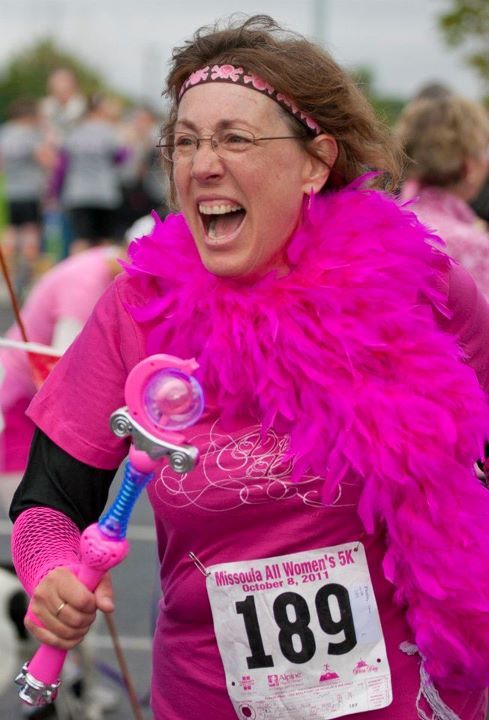 Today I began my third week of working for myself, which basically consists of a lot of bitching about my boss (crazy woman at right), who keeps telling me to sit down, shut up and write. Seriously, it’s been a much smoother transition than I expected.
  The downside? No paycheck. Let’s just say those lovely afternoon lattes at
 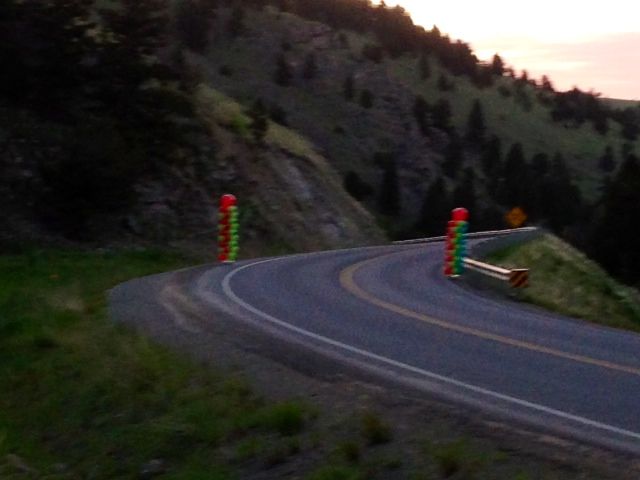 his last week though, the tables were turned, with the writing feeding the running. Or, in this case, the lack thereof. On a whim – which should have been my first clue that things would go badly – I signed up for the Governor’s Cup Marathon, in Helena, Montana. It’s a beautiful course, with a long downhill start from Marysville, a lonely spot on the road about 22 miles outside town. Maybe the downhill was more than my knees could handle. All I know is that I was in trouble by Mile 8. I hobbled along to Mile 13.1, for the psychological satisfaction of at least salvaging a half-marathon distance, and called it quits. My sweetie worried that I’d feel like a failure. “I feel great!” I responded. And I did.
 If I’d kept going, I’d have ended up with an injury. The whole thing reminded me of the way that leaving something in a book that doesn’t work, no matter how much you cherish that particular passage, hurts the end product. Cutting those parts is called “killing your darlings,” and some of my best writing is most bloodthirsty, wielding my delete key with the same relish with which Jack Nicholson swung his ax in “The Shining.” (That said, I generally save them in a file in case they might work better in some future piece.)
 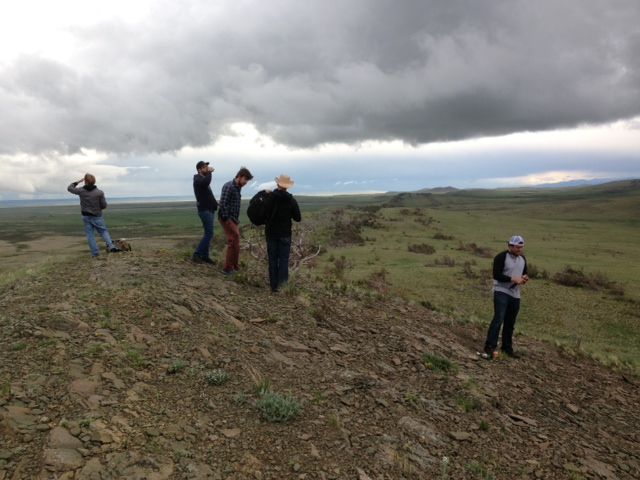 It’s the brainchild of journalists